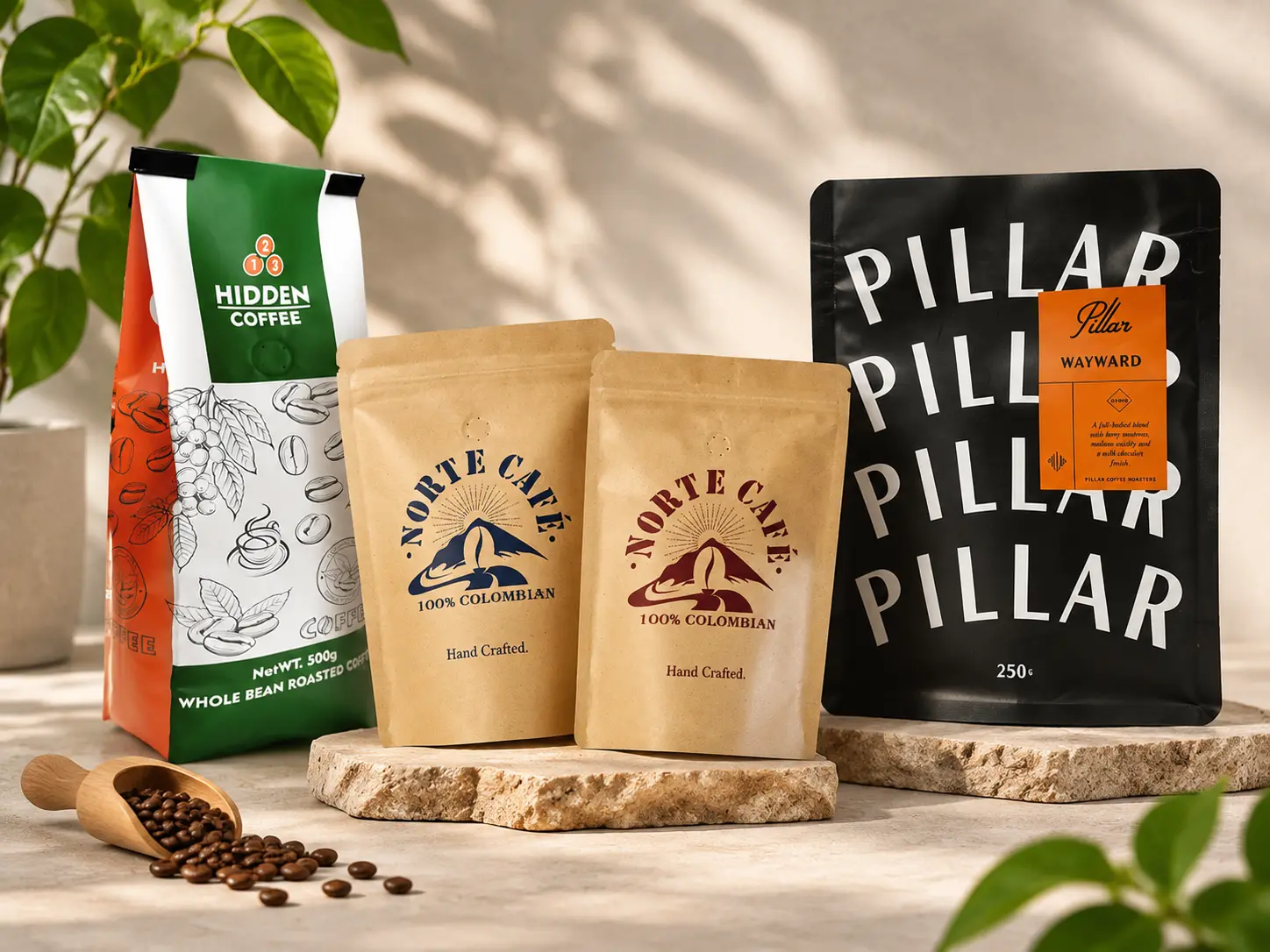
Coffee packaging must balance sustainability with product protection. Beyond reducing environmental impact, packaging must protect coffee from oxygen, moisture, light, and other factors that can affect aroma and quality during storage, shipping, and retail. This guide compares material options, barrier requirements, bag formats, and printing methods to help coffee brands and roasters choose packaging that fits their product needs and target markets.
What Makes Coffee Packaging Eco-Friendly?
Eco-friendly coffee packaging is not defined by a single material or label. It must be evaluated as a complete package, considering how the structure performs during use and whether a realistic end-of-life pathway exists in the market where it will be sold. That means looking beyond the outer film. Barrier layers, coatings, inks, zippers, and degassing valves can affect whether a bag is compatible with a recycling or composting pathway. A kraft-paper appearance alone does not prove that a package is recyclable, compostable, or plastic-free. The most suitable option depends on the full material structure, the package’s functional requirements, and the collection or processing systems available in the target market.
What Materials Are Used for Eco-Friendly Coffee Bags?
Common options include recyclable mono-material structures, compostable materials, and paper-based or kraft-look laminates. Their environmental claims and barrier performance depend on the complete structure and intended market.
Recyclable Mono-Material Coffee Packaging
 Recyclable coffee packaging may use PE- or PP-based structures designed to keep compatible materials within the same recycling family. Compared with some conventional multi-material laminates, mono-material designs may be more compatible with recycling systems where suitable collection and processing pathways exist.
When considering a recyclable structure, ensure it still provides the barrier performance needed for your coffee's intended shelf life. Confirm that the complete package, not just the base film, meets your product and storage requirements.
Compostable Coffee Packaging
 Compostable coffee bags use materials designed to break down under specified composting conditions. Depending on the structure and applicable certification, they may be intended for industrial or home composting.
These two options are not interchangeable. Confirm that the complete package meets the relevant requirements and check whether suitable composting facilities are available in your target market.
Paper-Based and Kraft Coffee Packaging
 Paper-based and kraft-look coffee bags appeal to brands seeking a natural appearance. However, the outer paper layer does not determine the environmental properties of the entire package.
Some structures combine paper with plastic films, coatings, or barrier layers to protect the coffee. Therefore, a kraft-look bag is not automatically recyclable, compostable, or plastic-free. Evaluate the complete material structure before making environmental claims.
Learn more about our sustainable packaging solutions
Recyclable vs. Compostable Coffee Packaging: Which Should You Choose?
Neither recyclable nor compostable packaging is automatically better for every coffee brand. The right choice depends on product protection, target-market requirements, and available end-of-life options.
| Factor | Recyclable Packaging | Compostable Packaging |
|---|---|---|
| End-of-life | Depends on local collection and recycling systems | Depends on required composting conditions and available facilities |
| Material design | May use compatible PE- or PP-based structures | Uses materials designed to compost under specified conditions |
| Coffee protection | Must meet the product's barrier requirements | Must also meet the product's barrier requirements |
| Key consideration | Confirm compatibility with the intended recycling route | Confirm applicable certification and disposal conditions |
When Should You Consider Recyclable Coffee Packaging?
Consider recyclable structures when the intended market has an appropriate collection and recycling pathway. Ask your supplier to confirm the compatibility of the finished package, including relevant valves, zippers, inks, and coatings.
When Should You Consider Compostable Coffee Packaging?
Consider compostable structures when the complete package meets the applicable requirements and a suitable composting route is available. Check whether the certification covers the complete package and confirm whether it is suitable for home or industrial composting. These two composting pathways are not interchangeable.
Why Barrier Performance Matters for Coffee Packaging
Coffee packaging must protect product quality throughout storage and distribution. Oxygen and light are two key factors affecting coffee freshness, aroma, and flavor. Moisture protection is also important, depending on the coffee type, storage conditions, and required shelf life.
Oxygen and Light Protection
Oxygen exposure accelerates oxidation, which can affect coffee aroma and flavor. Light exposure can also contribute to flavor deterioration and loss of freshness. The required barrier level depends on the coffee format, expected shelf life, and distribution conditions. Whole-bean and ground coffee may have different packaging requirements.
Choosing the Right Barrier Structure
Different material structures provide different levels of protection. When comparing options, consider:
- Shelf life: How long must the coffee maintain its intended quality?
- Distribution: What storage, shipping, and humidity conditions will the package encounter?
- Processing: Is the structure compatible with your filling and sealing equipment?
- Sustainability: Can the material meet your environmental goals while providing the required protection? Ask your supplier for relevant technical specifications and, where necessary, packaging performance testing. Do not assume that all recyclable, compostable, or conventional structures provide equivalent barrier performance.
Coffee Bag Valves and Resealable Closures: What Do You Need?
Coffee bag features should match your product, packaging process, and customer needs. Two common options are one-way degassing valves and resealable zippers. These features serve different purposes and can be used together in the same bag.

When Do You Need a Degassing Valve?
Freshly roasted coffee releases carbon dioxide after roasting. A one-way degassing valve allows gas to escape while helping limit outside air from entering the package. This helps manage gas buildup inside the bag and is commonly considered for freshly roasted whole-bean coffee, depending on the product and packaging requirements.
Do You Need a Resealable Closure?
A resealable zipper lets consumers close the bag after opening, making repeated use more convenient. It can help reduce exposure to air and moisture between uses, helping maintain coffee quality after opening. However, a zipper does not replace the initial heat seal or the barrier protection provided by the packaging structure. Before selecting these features, consider your coffee format, filling and sealing process, expected use after opening, and end-user needs.
Coffee Bag Formats: Which Structure Fits Your Product?
The right coffee bag format depends on your product characteristics, target fill weight, filling process, storage requirements, and retail presentation. Common options include stand-up pouches, flat-bottom bags, and side-gusset bags, each offering different benefits for coffee brands.

Stand-Up Coffee Pouches
Stand-up pouches feature a bottom gusset that allows the bag to stand upright on retail shelves. They offer flexible design options and can accommodate features such as resealable zippers and one-way degassing valves, depending on the package structure.
Flat-Bottom Coffee Bags
Flat-bottom bags have a rectangular base, a flat front and back, and side gussets that create a box-like shape. Their structured appearance provides a stable shelf presentation and space for branding and product information. They are often considered by brands seeking an organized, premium retail look.
Side-Gusset Coffee Bags
Side-gusset bags expand through folds on both sides to create additional capacity. When empty, the gussets can fold inward, making the bags easier to store and handle. They are worth considering for brands that prioritize packing efficiency or compatibility with established filling processes.
How to Choose the Right Format
Before finalizing a coffee bag format, confirm the target fill weight, finished bag dimensions, filling equipment compatibility, and required closure and barrier features with your packaging supplier. Confirming these details before production can help avoid fit, filling, and sealing issues. Explore our custom coffee bags to compare packaging options for your brand.
Printing Methods for Custom Coffee Bags
The right printing method depends on your order quantity, design requirements, budget, and plans for repeat orders. Digital and gravure printing are two common options.

Digital Printing for Short Runs
Digital printing is suitable for brands that need smaller order quantities, flexible design changes, or multiple designs without investing in gravure printing cylinders. At Yihaipack, digital printing typically starts at 1,000 pieces per size. Multiple designs can be included within the same size. The production lead time is approximately 7–12 days after artwork approval.
Gravure Printing for Larger Orders
Gravure printing is worth considering for larger production runs and brands with established packaging designs. At Yihaipack, gravure printing typically starts at 5,000 pieces per design, with a production lead time of approximately 12–15 days after artwork approval. Gravure printing requires printing cylinders, which Yihaipack retains for two years. For repeat orders, existing cylinders can generally be reused when the artwork, dimensions, colors, and printing specifications remain unchanged and the cylinders are in suitable condition. In such cases, no additional cylinder-making charge is required.
How to Choose the Right Printing Method
If you are launching a new coffee brand, testing different designs, or ordering smaller quantities, digital printing may be a practical starting point. For established products with larger production runs or regular repeat orders, gravure printing may offer better production economics. Before deciding, consider your total order quantity, number of designs, expected reorder frequency, budget, and required delivery schedule.
5 Steps to Choose Eco-Friendly Coffee Packaging
Use this checklist to turn your product and market requirements into a practical packaging brief for your supplier.

1. Define Your Coffee's Protection Requirements
Consider your coffee type, expected shelf life, storage conditions, and protection needs—especially against oxygen and light, as well as moisture. Use these requirements to determine the barrier performance your packaging needs.
2. Choose a Material with a Suitable End-of-Life Pathway
Compare recyclable, compostable, and paper-based options based on the complete package structure, applicable certifications, and disposal or recovery options available in your target market.
3. Select the Right Bag Format and Features
Choose a bag format that suits your fill weight, filling equipment, and retail presentation. Then determine whether you need features such as a degassing valve, resealable zipper, or tear notch.
4. Match Printing to Your Order Requirements
Consider your initial order quantity, number of designs, budget, and expected reorder frequency. Digital printing may suit shorter runs and design flexibility, while gravure printing may be worth evaluating for larger or recurring orders.
5. Verify Specifications Before Production
Before approving your order, confirm the material structure, barrier requirements, bag dimensions, printing specifications, functional features, and relevant compliance documentation with your packaging supplier.
Frequently Asked Questions About Eco-Friendly Coffee Packaging
1. Can I Get Samples of Your Coffee Bags?
Yes. We can provide free existing bag samples that use the same or similar materials, structures, accessories, or finishing and printing processes you are considering. You only need to cover the shipping cost. If you need a custom-printed sample made specifically for your project, we can also arrange it. The sample charge may be reduced or fully refunded depending on the specific order arrangement.
2. What Is the Minimum Order Quantity (MOQ) for Custom Coffee Bags?
Our minimum order quantity depends on the printing method. Digital printing typically starts at 1,000 pieces per size, and multiple designs can be included within the same size. Gravure printing typically starts at 5,000 pieces per design.
3. How Do You Ensure Adequate Barrier Protection for Coffee Packaging?
We recommend suitable packaging material structures based on your coffee type, freshness requirements, expected shelf life, and storage and distribution conditions. Specific barrier performance should be confirmed against relevant technical specifications and, where necessary, packaging performance testing.
4. Do You Provide Design Services for Custom Coffee Bags?
We do not provide graphic design from scratch, but we can assist with layout and prepare production-ready files. If you already have print-ready files, you can send them to us. If not, you can provide a packaging mockup, logo, text, or other design elements, and we can use these materials to prepare the files needed for production.
5. What Shipping Options Do You Offer?
We offer a full range of shipping options, including ocean freight, air freight, and international express delivery. Whether you place a small or large order, we can help arrange suitable logistics solutions based on your destination, shipment size, and delivery requirements.
6. Is a PE/PP Mixed Structure Truly Recyclable?
PE and PP are both polyolefins, so combining them creates a mixed-polyolefin packaging structure. Although this structure may be classified as recyclable under certain European recycling systems, it should not be considered a universally recyclable solution. Its practical recyclability depends on the recycling infrastructure available in the target market. At Yihaipack, we do not recommend PE/PP mixed structures as a default recyclable option. For recyclable coffee bags, we generally recommend PE-based mono-material structures where suitable collection and recycling pathways exist.
7. Are Biodegradable and Compostable Packaging the Same?
No. Biodegradable materials can break down through natural processes, but the time and conditions vary. The term alone does not guarantee compostability or a specific breakdown timeframe. Compostable packaging must meet defined standards under specified composting conditions. Depending on its certification, it may be suitable for industrial or home composting. Always check certification for the complete package, as these two routes are not interchangeable.
8. Which Recyclable Coffee Bag Structure Do You Most Commonly Recommend?
We most commonly recommend PE/PE mono-material structures for recyclable coffee bags. Other recyclable options are also available to meet different product requirements and target markets.
9. Which Compostable Coffee Bag Structures Do You Most Commonly Recommend?
We most commonly recommend two compostable coffee bag structures: Kraft paper + VMPLA + PBAT, and Kraft paper + NKME + PBS. Other compostable options are also available to meet different product requirements and target markets.
10. How Does Coffee Shelf Life Differ Between Recyclable and Compostable Packaging?
Based on our experience with typical coffee packaging applications, recyclable structures generally support a shelf life of 12–24 months, while compostable structures typically support 9–18 months. Actual shelf life depends on the complete packaging structure, barrier performance, degassing valve, sealing quality, coffee type, and storage conditions. Product-specific testing is recommended to confirm the expected shelf life.